Plain-English Q&A across multi-tenant document workspaces.
Lunaria is a document management platform built around three pillars: ingest anything (uploads, Google Drive sync, OCR for scanned files), find anything (Nova — natural-language search powered by Graph RAG over SurrealDB), and share safely (workspace-scoped multi-tenancy, plan-aware RBAC, audited portal links).
- Nuxt 3 · Vue 3
- NestJS 11
- PostgreSQL · Prisma
- SurrealDB
- Python FastAPI
- IBM Docling · EasyOCR
- BullMQ · Redis
- AWS S3
- CASL · Better Auth
How we framed it.
Polyglot by design: a Nuxt 3 frontend talks to a NestJS 11 backend that delegates layout-aware OCR to a Python FastAPI sidecar running IBM Docling + EasyOCR. Documents land in S3, get extracted into semantic chunks, and are ingested into a SurrealDB knowledge graph so search traverses entity relationships — not raw cosine similarity. Multi-hop questions like "contracts mentioning vendors based in Germany" become answerable.
Inside the build.
Document processing pipeline
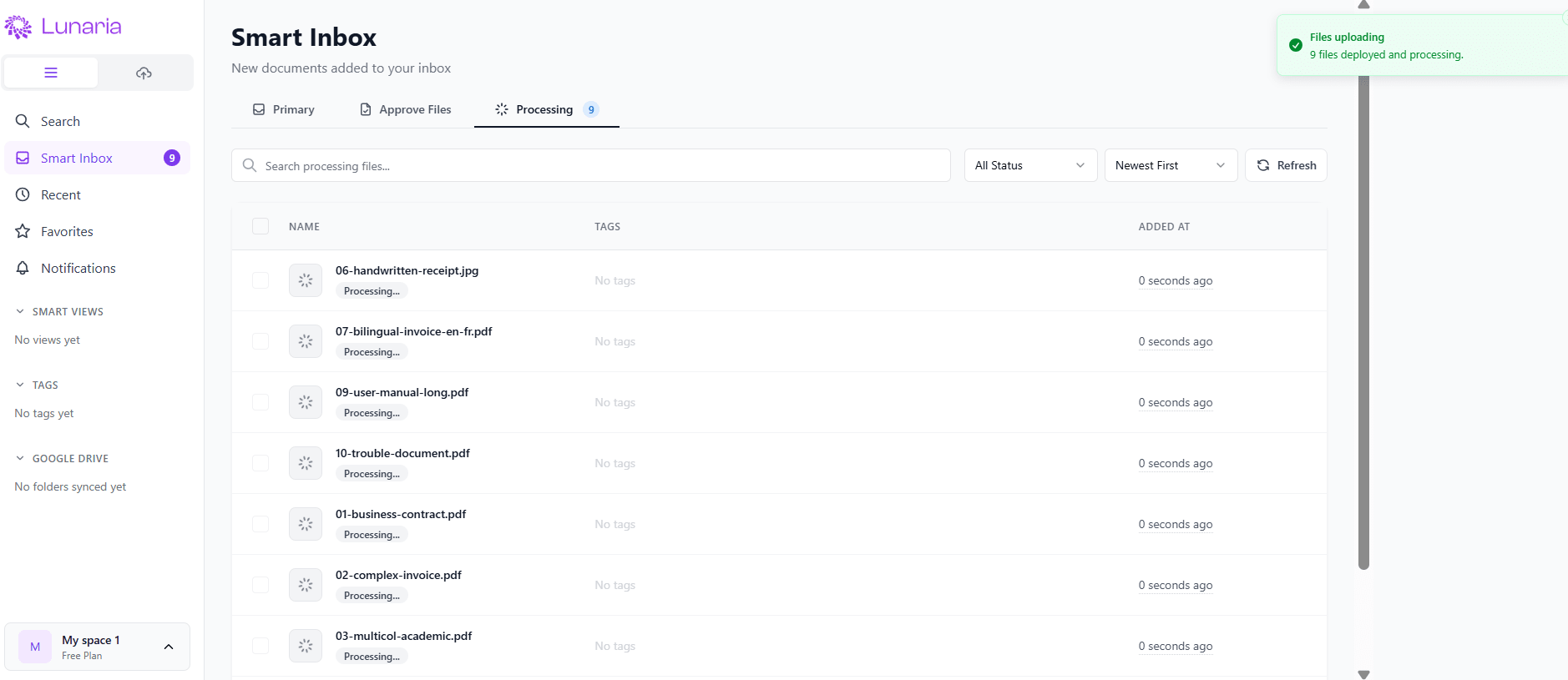
Upload → NestJS → S3 → BullMQ extraction job → Python docling-service over HTTP (EasyOCR + HybridChunker) → semantic chunks → SurrealDB knowledge graph → Gemini-backed structured extraction. AiTokenUsage tracks per-workspace LLM spend.
Graph RAG over SurrealDB
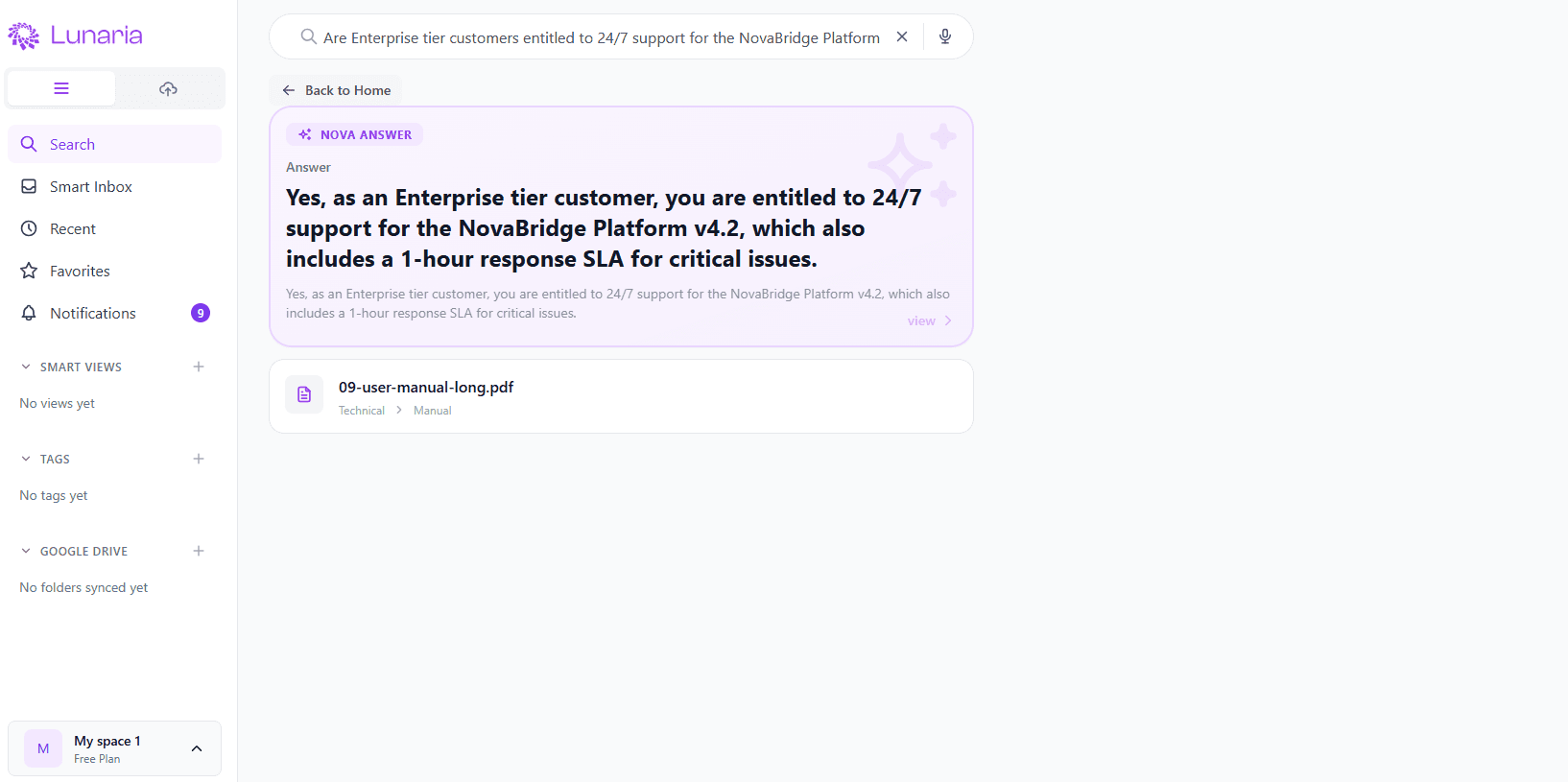
Instead of vector DB cosine similarity, Lunaria builds a knowledge graph linking entities across documents. Search traverses the graph for relationship-aware retrieval — outperforms raw embedding search on multi-hop questions where the answer requires connecting facts across documents.
Workspace context middleware
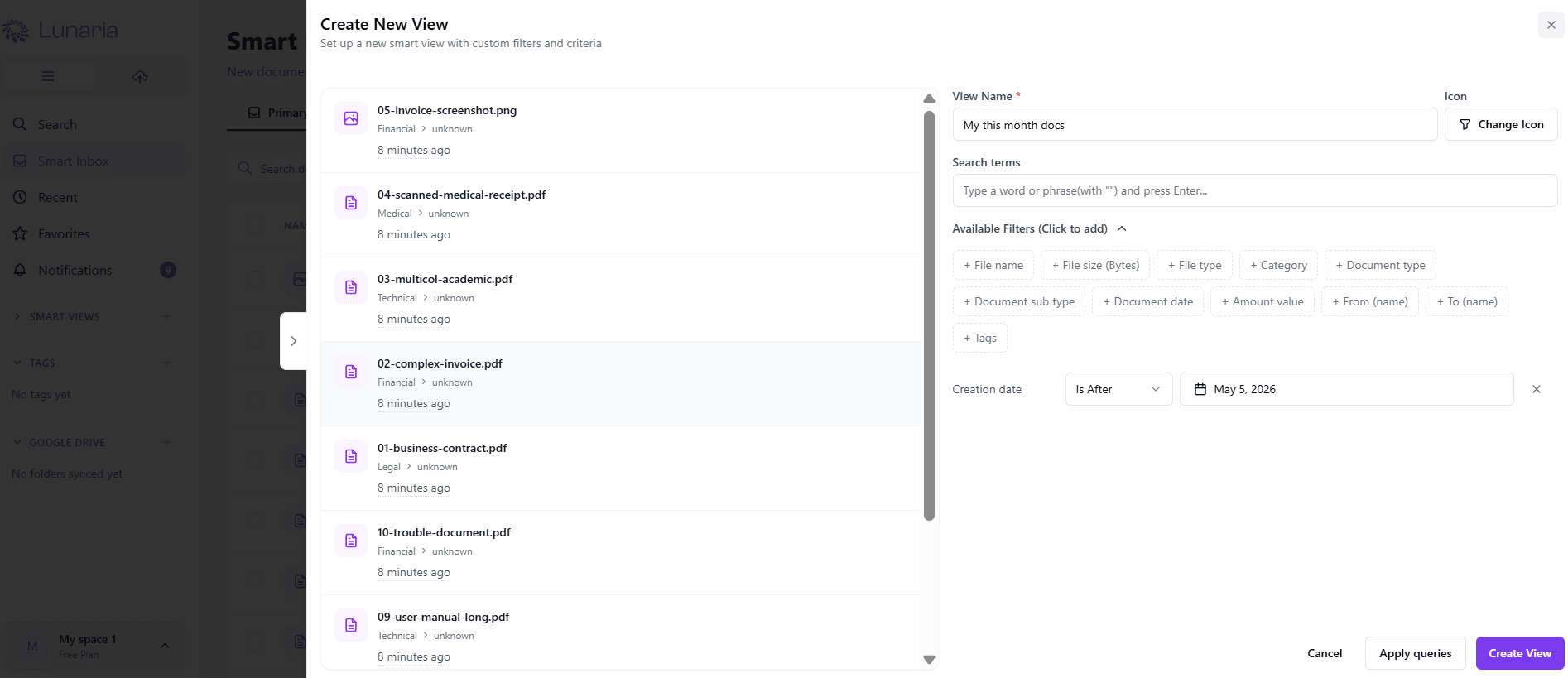
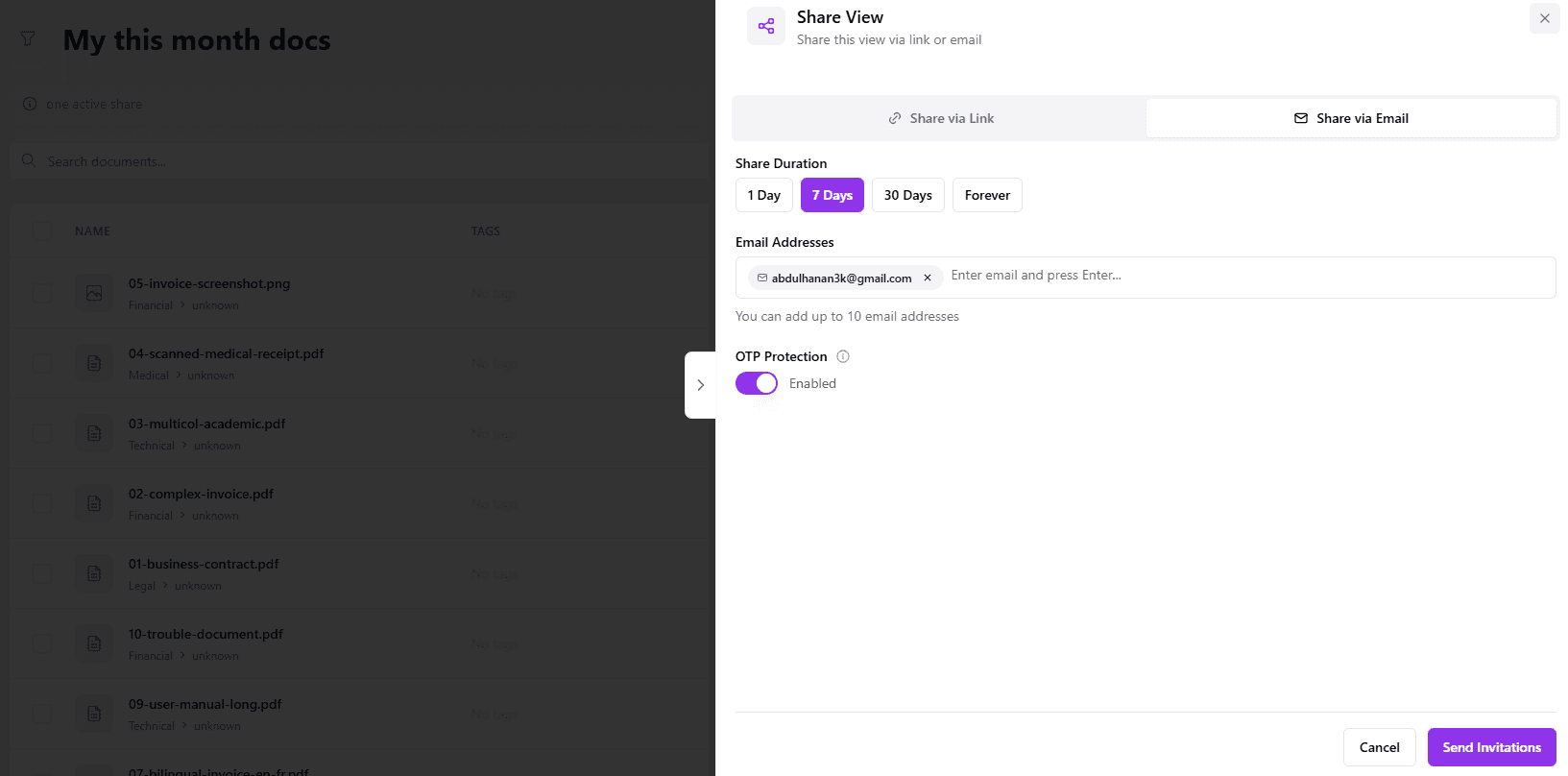
Every request carries x-workspace-id; WorkspaceContextMiddleware validates membership and injects the context, then every Prisma query is workspace-filtered automatically. Cross-tenant data leaks become structurally impossible without an explicit, audited override.
Plan-aware RBAC
Three roles (Owner / Admin / Member) plus resolveEffectiveRole() that clamps Admin → Member on lower-tier plans. CASL ability factory + PermissionsGuard + @RequirePermissions() enforce per-resource permissions without exploding into a per-tier role matrix.
Single-command dev environment
One docker compose up brings Postgres + Redis + LocalStack (S3 + DynamoDB + Secrets) + SurrealDB + MailHog + Docling online. New contributors get prod-parity dev environments without AWS credentials. 290+ Vitest + Playwright tests guard the stack.
What shipped.
- Plain-English Q&A over private document corpora with source citations
- Multi-hop semantic search that beats vector cosine similarity on real questions
- Multi-tenant workspaces with structural cross-tenant isolation
- OCR-powered ingestion makes scanned files queryable